
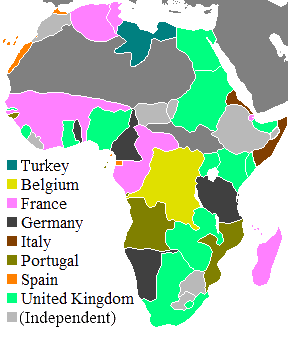
Key Takeaways:
- The Colonial Africa 1900 Map depicts the political boundaries of African countries during the era of European colonization.
- It showcases the extensive control exercised by European powers over various regions in Africa.
- This map is a valuable historical artifact that highlights the impact of colonialism on the continent.
History of the Colonial Africa 1900 Map:
The Colonial Africa 1900 Map refers to a cartographic representation of Africa during the period of heavy European influence and colonization. During the late 19th and early 20th centuries, European powers, including Britain, France, Germany, Belgium, Portugal, and Italy, competed for territorial control over different parts of the continent.
The “Scramble for Africa” led to the carving up of Africa into various colonies, thereby redrawing the political boundaries established by indigenous African communities. The Colonial Africa 1900 Map offers a visual depiction of these boundaries and the extent of colonial dominance at the turn of the 20th century.
Unique Insights of the Colonial Africa 1900 Map:
1. Complexity of Colonial Borders: The map demonstrates the complex network of colonial borders, often drawn without considering the cultural, linguistic, and historical divisions of African societies. As a result, the newly established borders led to numerous ethnic tensions and conflicts in later years.
2. Imperial Competition: This map helps us understand the intense rivalry among European powers to claim as much African territory as possible. It displays the extent to which these powers sought to exploit Africa’s resources, establish trading routes, and exert control over indigenous populations.
3. Legacy of Colonization: The Colonial Africa 1900 Map reminds us of the lasting impact of colonial rule in Africa. The division of the continent into arbitrary boundaries and the imposition of foreign systems of governance continue to shape political and social dynamics in many African countries.
Table of Relevant Facts:
| Event | Date | Description |
|---|---|---|
| Berlin Conference | 1884-1885 | European powers meet to discuss and establish rules for the colonization of Africa. |
| Scramble for Africa | Late 19th – Early 20th Century | European powers rapidly expand their territorial claims, resulting in the redrawing of political boundaries. |
| Rubber Boom | Late 19th – Early 20th Century | Colonial powers exploit African rubber resources, leading to significant economic growth for European nations. |
Frequently Asked Questions (FAQ):
-
Why did European powers colonize Africa?
European powers sought to expand their territories, exploit Africa’s vast resources, establish strategic trade routes, and extend their economic and political influence.
-
What were the consequences of colonialism in Africa?
Colonialism resulted in the imposition of foreign systems of governance, cultural disruption, economic exploitation, loss of indigenous territories, and the creation of artificial borders leading to ethnic tensions and conflicts.
-
How did African communities resist European colonization?
African communities resisted European colonization through armed rebellions, diplomatic negotiations, political movements, and preservation of cultural identity.
-
Did any African countries remain independent?
Yes, a few African countries, such as Ethiopia and Liberia, managed to maintain their independence during the period of European colonization.
-
When did the process of decolonization begin?
The process of decolonization gained momentum after World War II, with African nations gradually achieving independence throughout the mid-20th century.
-
How did colonialism shape the current African borders?
Colonial powers imposed artificial borders disregarding ethnic and cultural divisions. This has resulted in ongoing territorial disputes and conflicts in contemporary Africa.
-
Is the Colonial Africa 1900 Map still relevant today?
Although the specific political boundaries have changed, this map remains relevant as it showcases the historical roots of Africa’s current geopolitical landscape and highlights the challenges faced by the continent due to its colonial past.
External Links:
List of LSI Keywords:
- Colonial Africa in 1900
- African colonization
- European powers in Africa
- Scramble for Africa
- Impact of colonialism on Africa
- Political boundaries of Africa in 1900
- Legacy of European colonization