
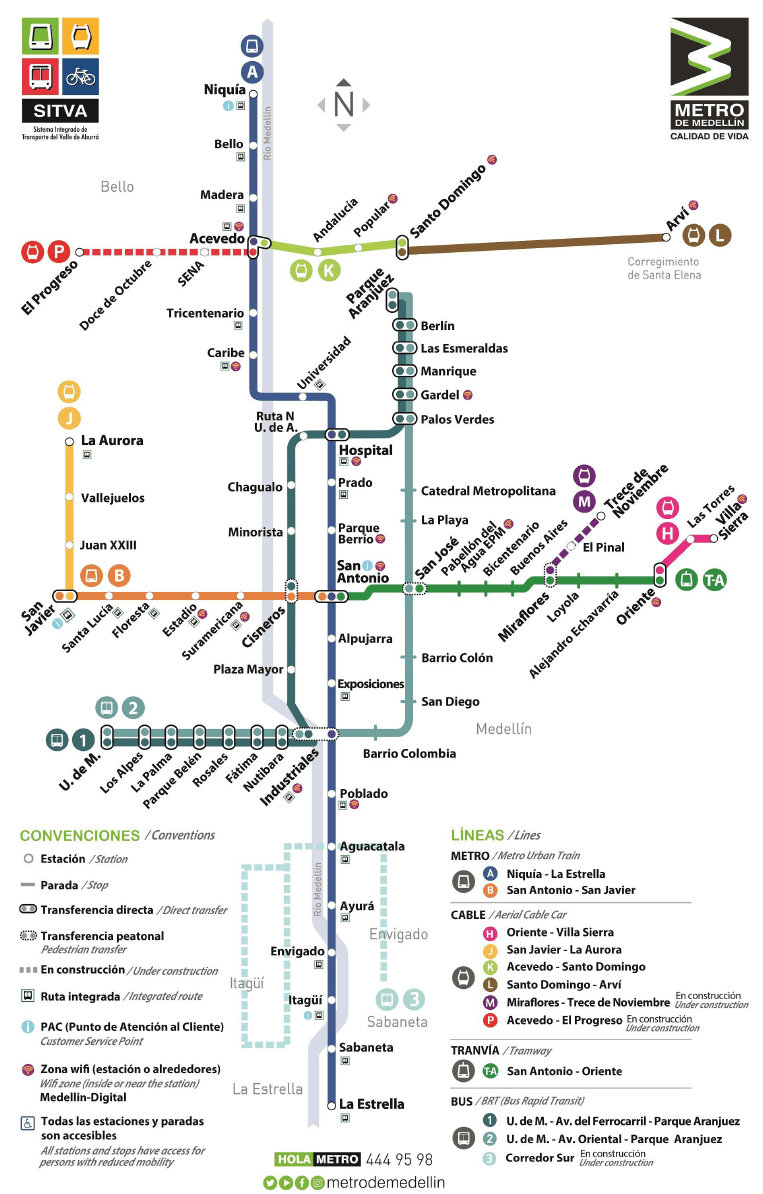
Mapa Metro De Medellín
Key Takeaways
- Medellín’s Metro system is an integral part of the city’s transportation network.
- The Metro connects various neighborhoods, making commutes easier and faster.
- It is one of the few metro systems in Colombia and plays a crucial role in urban mobility.
- The Metro offers a safe, efficient, and affordable mode of transportation for both residents and tourists.
History of Medellín’s Metro System
The Metro de Medellín, also known as the Metropolitan Area of Medellín, is a rapid transit system serving the city of Medellín and its surrounding areas. It is one of the oldest and most extensive metro systems in Colombia.
The construction of the Metro began in 1985, in response to the city’s growing population and transportation needs. The first line, Line A, was officially opened to the public in November 1995. It connected the city center with the southern neighborhoods, providing a much-needed transportation solution for residents.
Over the years, the Metro system expanded with the addition of Line B in 2000 and Line L in 2015. Line B runs north-south, parallel to Line A, while Line L branches off from Line B and serves the western areas of the city. The continuous growth of the Metro network showcases the commitment of Medellín’s authorities to enhance urban mobility.
Today, the Metro de Medellín boasts a length of over 32 kilometers and serves millions of commuters every day.
Unique Insights
- The Metro de Medellín uses a combination of underground, elevated, and surface-level tracks, adapting to the city’s topography.
- The metro system is known for its cleanliness and efficient operations.
- Medellín’s Metro has become an iconic symbol of the city and is considered one of the safest metro systems in Latin America.
- Art and culture are integrated into the Metro’s stations, featuring murals, sculptures, and artistic installations.
- Due to its success, Medellín’s Metro has inspired other Colombian cities, such as Bogotá and Barranquilla, to develop their own metro systems.
Table of Relevant Facts
| Year | Event |
|---|---|
| 1985 | Construction of the Metro de Medellín begins. |
| 1995 | Line A (first line) is inaugurated. |
| 2000 | Line B is added to the Metro system. |
| 2015 | Line L, connecting the western areas, is opened. |
Frequently Asked Questions (FAQ)
1. How many lines does the Metro de Medellín have?
The Metro de Medellín currently has three lines: Line A, Line B, and Line L.
2. Are the Metro stations accessible for people with disabilities?
Yes, the Metro de Medellín is designed to be accessible for people with disabilities. It provides elevators and ramps at stations to ensure easy access for everyone.
3. What are the Metro’s operating hours?
The Metro operates from 4:30 am until 11:00 pm on weekdays. On weekends and holidays, it operates from 5:00 am until 10:00 pm.
4. Can I use the same ticket to transfer between lines?
Yes, the Metro ticket allows you to transfer between lines without purchasing an additional ticket.
5. What is the cost of a Metro ticket?
The cost of a single Metro ticket is affordable, making it an accessible option for residents and tourists. The exact fare may vary, so it’s best to check the official Metro website for up-to-date pricing information.
6. Does the Metro reach the international airport?
No, the Metro does not currently reach the international airport. However, there are convenient connections available, such as the Airport Bus or taxi services, to travel between the airport and the Metro system.
7. Can I use the Metro to visit popular tourist attractions in Medellín?
Absolutely! The Metro serves many popular tourist attractions in Medellín, including Pueblito Paisa, Parque Explora, and Plaza Botero. Its extensive coverage makes it convenient for exploring the city.
External Links
List of LSI Keywords
- Medellín Metro system
- Medellín transportation network
- Urban mobility in Medellín
- Colombian metro systems
- Efficient operations of Metro de Medellín
- Safety of Medellín’s Metro system
- Integration of arts and culture in Metro stations