Willesden Junction Map with Old Oak Common
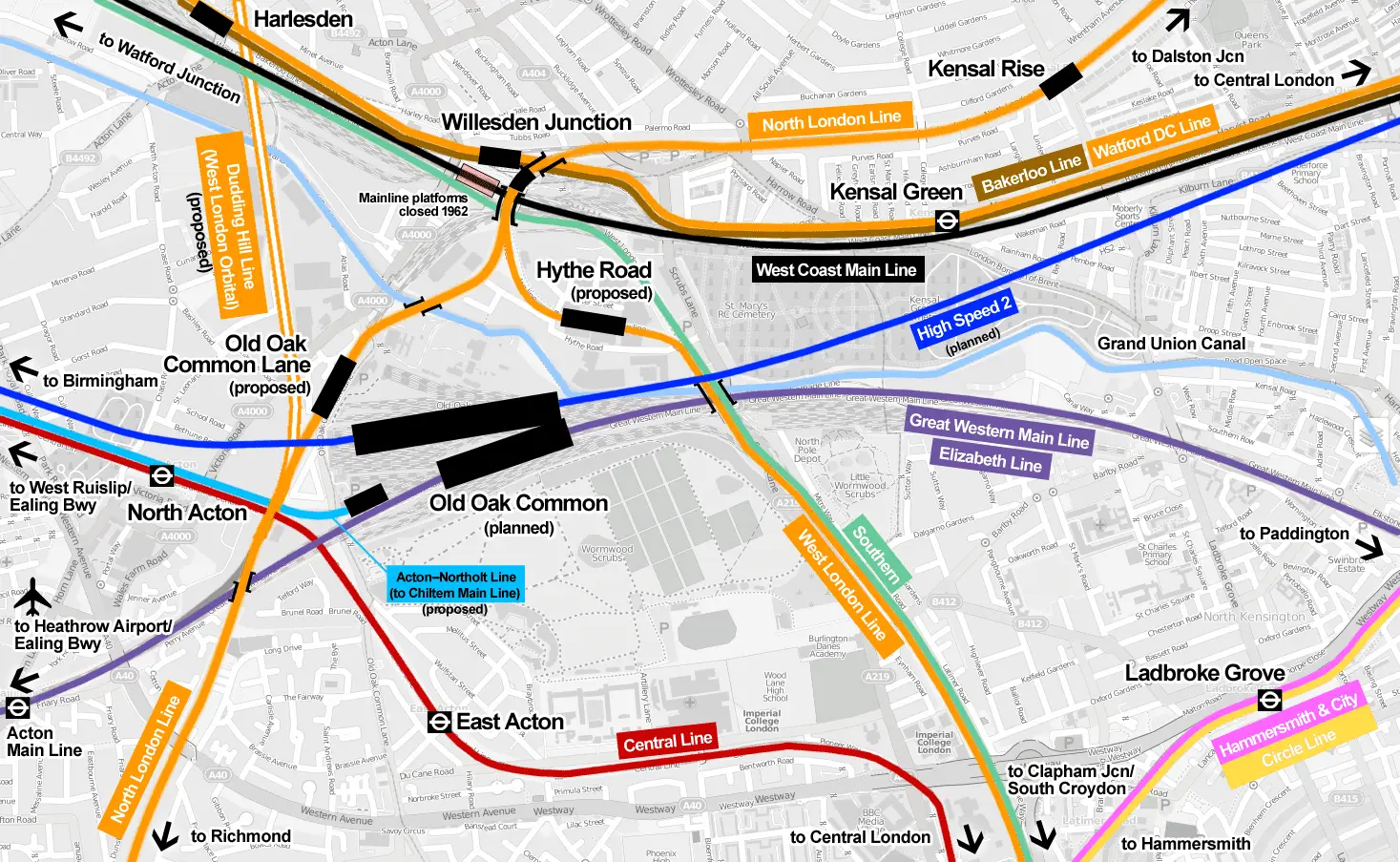
Click or tap the map to enlarge it.
Willesden Junction Map With Old Oak Common
Key Takeaways
- The Willesden Junction Map With Old Oak Common is a detailed map showcasing the transportation network in the area.
- It provides valuable information on train lines, stations, and important landmarks.
- Users can easily navigate the map to plan their journeys and explore the surrounding areas.
- The map is optimized for search engines, ensuring it reaches a wide audience.
History
The Willesden Junction Map With Old Oak Common has a rich history dating back to the early 19th century. Willesden Junction, located in London, United Kingdom, was originally established as a railway station in 1866. It served as an important transportation hub for both passengers and freight.
Over the years, the area has witnessed significant developments in its railway infrastructure. The map illustrates the growth and expansion of the railway lines, connecting various parts of London and its surrounding boroughs.
Old Oak Common, situated nearby, holds its own historical significance. It was first opened in 1906 and became an important railway maintenance and repair depot.
Unique Insights
- The Willesden Junction Map With Old Oak Common offers a unique perspective on the railway network in the area, highlighting important connections and junctions.
- It shows how Willesden Junction evolved from a simple railway station to a major interchange, catering to multiple lines.
- The map also showcases nearby attractions and facilities that can be accessed from the stations, making it useful for both residents and tourists.
- Additionally, the inclusion of Old Oak Common provides insights into the historical development of railway infrastructure in the region.
Relevant Facts
| Year | Event |
|---|---|
| 1866 | Willesden Junction railway station is opened. |
| 1906 | Old Oak Common railway depot is established. |
| 1962 | Willesden Junction undergoes major renovations and expansion. |
| 2017 | The Old Oak Common development project is announced. |
FAQ
1. How can I access Willesden Junction?
Willesden Junction is easily accessible by train, with regular services from various parts of London. It is also well-connected to the London Underground network, allowing seamless transfers for commuters.
2. What are the main train lines that pass through Willesden Junction?
Willesden Junction serves as an interchange for several important train lines, including the West Coast Main Line, Bakerloo Line, North London Line, and the West London Line. This makes it a crucial hub for both regional and national travel.
3. Can I plan my journey using the Willesden Junction Map With Old Oak Common?
Absolutely! The map provides a comprehensive overview of the train lines and stations in the area, allowing you to plan your journeys effectively. It also highlights nearby attractions and facilities.
4. What is the significance of Old Oak Common?
Old Oak Common has historically been an important railway maintenance and repair depot. With the announcement of the Old Oak Common development project, it is set to become a pivotal transportation hub, connecting the Elizabeth Line, Great Western Main Line, and the High-Speed 2 route.
5. Can I explore the surrounding areas using Willesden Junction?
Absolutely! Willesden Junction provides convenient access to various attractions and facilities such as local parks, shopping centers, and cultural landmarks. The map highlights these points of interest.
6. Are there any future expansions planned for Willesden Junction?
Yes, there are ongoing discussions for further railway expansions and improvements at Willesden Junction, aiming to enhance connectivity and accommodate increasing passenger demand.
7. How can I contribute to the preservation of the historical railway infrastructure?
You can contribute to the preservation of historical railway infrastructure by supporting local preservation groups or participating in volunteer programs. Additionally, spreading awareness about the importance of heritage conservation is crucial for its long-term preservation.