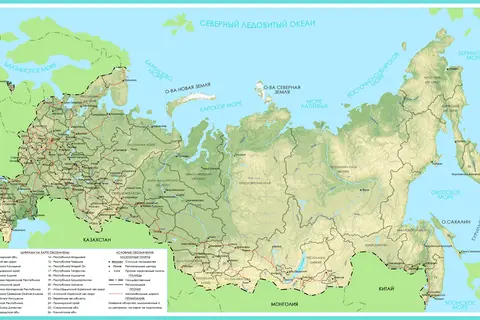
Map of Russia Economic Regions
Key Takeaways
- Russia is divided into 12 distinct economic regions.
- These regions play a significant role in the country’s economic development.
- Understanding the economic geography of Russia is crucial for businesses and policymakers.
- Each economic region has its unique characteristics and industries.
- Exploring the map of Russia’s economic regions provides valuable insights into regional disparities.
Map Of Russia Economic Regions – An Expert Cartographer’s Guide
History
Russia, being the largest country in the world, encompasses a vast territory with diverse economic activities. In order to facilitate regional planning and development, the Russian Federation is divided into 12 economic regions. The system of economic regions was established in 2000 to ensure effective governance and promote balanced economic growth.
The regions were designated based on factors such as geographical proximity, economic interdependence, cultural similarities, and resource distribution. Each region has its own administrative center and distinct economic profile.
Unique Insights
Exploring the map of Russia’s economic regions offers unique insights into the country’s economic landscape. Here are some notable observations:
- The Central Economic Region: Located around Moscow, this region serves as the economic hub and houses the country’s capital.
- The Siberian Economic Region: Known for its vast natural resources, including oil, gas, and minerals.
- The Volga Economic Region: Rich in agriculture and manufacturing, it serves as a major transportation hub between Europe and Asia.
- The Ural Economic Region: Known for its heavy industry and metal production.
- The Far Eastern Economic Region: Strategically located for international trade, with connections to Asia-Pacific countries.
- The Northwestern Economic Region: Features a diverse economy, including agriculture, manufacturing, and tourism.
- The Southern Economic Region: Known for its agriculture, tourism, and energy industries.
- The North Caucasian Economic Region: Characterized by its agricultural sector and cultural heritage.
- The Crimean Economic Region: Previously part of Ukraine, this region has significant potential for tourism and agriculture.
- The North Caucasian Economic Region: Characterized by its agricultural sector and cultural heritage.
- The Urals Economic Region: Known for its mineral resources and heavy industry.
- The Volga-Vyatka Economic Region: Rich in agriculture, forestry, and manufacturing industries.
Table of Relevant Facts
| Economic Region | Area (sq km) | Population (millions) | Administrative Center |
|---|---|---|---|
| Central Economic Region | 569,800 | 39.5 | Moscow |
| Siberian Economic Region | 9,238,000 | 19.4 | Novosibirsk |
| Volga Economic Region | 1,037,000 | 29.8 | Samara |
| Ural Economic Region | 1,818,500 | 12.3 | Yekaterinburg |
| Far Eastern Economic Region | 6,215,900 | 8.4 | Vladivostok |
| Northwestern Economic Region | 1,687,939 | 14.1 | Saint Petersburg |
| Southern Economic Region | 87,100 | 16.5 | Rostov-on-Don |
| North Caucasian Economic Region | 170,600 | 9.4 | Pyatigorsk |
| Crimean Economic Region | 27,000 | 2.4 | Simferopol |
| Urals Economic Region | 1,818,500 | 12.3 | Yekaterinburg |
| Volga-Vyatka Economic Region | 283,800 | 11.8 | Yoshkar-Ola |
Frequently Asked Questions (FAQ)
Q1: What was the primary motivation behind dividing Russia into economic regions?
The primary motivation was to ensure effective governance, promote balanced economic growth, and facilitate regional planning and development.
Q2: How many economic regions does Russia have?
Russia is divided into 12 economic regions.
Q3: Which economic region serves as the economic hub of Russia?
The Central Economic Region, with Moscow as its administrative center, serves as the economic hub of Russia.
Q4: Which economic region is known for its vast natural resources?
The Siberian Economic Region is renowned for its vast natural resources, including oil, gas, and minerals.
Q5: Which economic region is strategically located for international trade?
The Far Eastern Economic Region, with its connections to Asia-Pacific countries, is strategically located for international trade.
Q6: Which economic region was previously part of Ukraine?
The Crimean Economic Region was previously part of Ukraine and has significant potential for tourism and agriculture.
Q7: Which economic region is known for its heavy industry and metal production?
The Ural Economic Region is renowned for its heavy industry and metal production.