
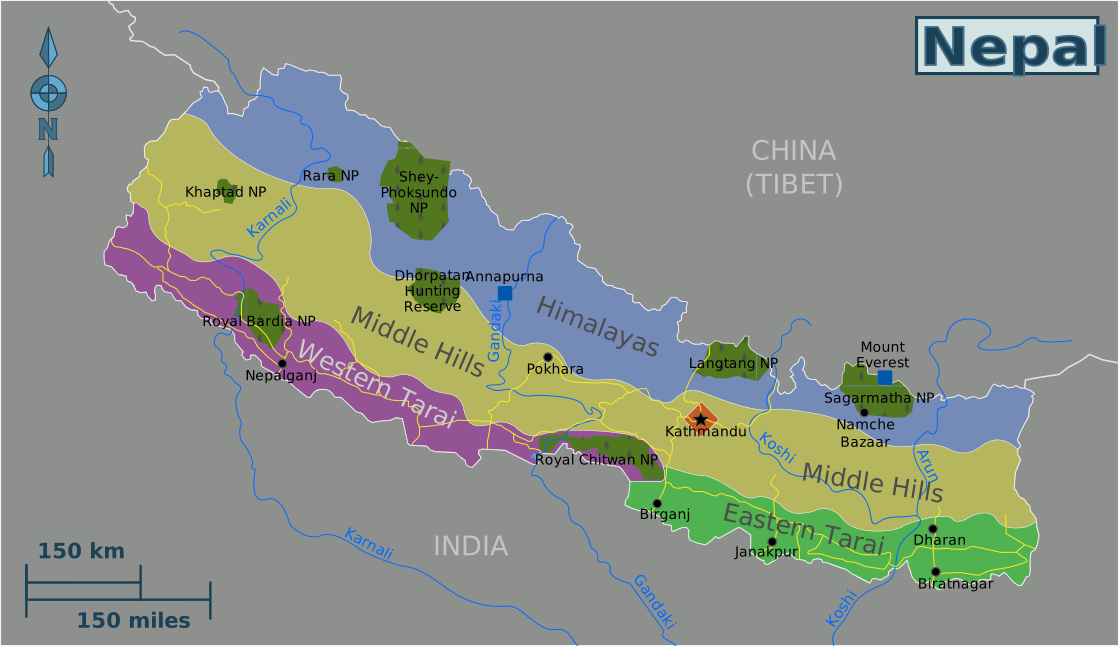
Exploring Nepal: Regions Map – A Comprehensive Guide
Key Takeaways
- The map of Nepal highlights the different regions and their unique characteristics.
- Understanding the regions can help in planning trips, exploring cultural diversity, and experiencing
breathtaking natural beauty. - Nepal’s regions offer a wide range of activities including trekking, wildlife spotting, and cultural
immersion.
History of Nepal and its Region
Lying between two of the world’s largest countries, India and China, Nepal is a country known for its
extraordinary landscapes, rich cultural heritage, and majestic mountains, including Mount Everest, the highest
peak on earth. The country has a diverse geography that is divided into several regions, each with its own
distinct features and historical significance.
1. Terai Region
The Terai region is situated in the southern lowland plains and is known for its fertile soil and dense
forests. Historically, it served as a trade and transit route between India and Nepal, and it is home to various
ethnic communities.
2. Hill Region
The Hill region lies between the Terai and the Himalayas and is characterized by its mid-altitude geography.
This region is culturally diverse, with different ethnic groups and ancient towns like Kathmandu, the capital
city of Nepal.
3. Kathmandu Valley
The Kathmandu Valley is the political, cultural, and economic hub of Nepal. It is home to three major cities:
Kathmandu, Bhaktapur, and Patan, each having its own historical and architectural significance. The valley is
renowned for its UNESCO World Heritage Sites, temples, and palaces.
4. Mountain Region
The Mountain region occupies the northern part of Nepal and includes the mighty Himalayas, including Mount
Everest, Annapurna, and many other breathtaking peaks. This region offers world-class trekking opportunities,
scenic landscapes, and a chance to witness the traditions of local mountain communities.
Unique Insights
Exploring Nepal’s regions provides various unique insights and experiences. Some of them include:
- The Terai region is known for its wildlife reserves and national parks, offering opportunities for jungle
safaris and rare animal sightings. - The Hill region is dotted with ancient temples, monasteries, and shrines, showcasing a blend of Hinduism and
Buddhism. - The Kathmandu Valley is a treasure trove of architectural wonders, with ancient palaces, intricately
carved wooden windows, and medieval squares. - The Mountain region offers extraordinary trekking routes such as the Everest Base Camp and Annapurna
Circuit, attracting adventure enthusiasts from all over the world.
Table of Relevant Facts
| Region | Significant Features |
|---|---|
| Terai | Fertile plains and dense forests, ethnic diversity |
| Hill | Cultural diversity, ancient towns, including Kathmandu |
| Kathmandu Valley | Historical and architectural significance, UNESCO World Heritage Sites |
| Mountain | Majestic Himalayas, trekking opportunities, traditional mountain communities |
Frequently Asked Questions
1. What are the best trekking routes in Nepal?
Nepal offers several incredible trekking routes, but some of the best ones include Everest Base Camp Trek,
Annapurna Circuit Trek, and Langtang Valley Trek.
2. Which region is best for wildlife spotting?
The Terai region is renowned for wildlife spotting. Chitwan National Park and Bardia National Park are popular
destinations for jungle safaris and observing endangered species.
3. What is the best time to visit Nepal?
The best time to visit Nepal is during spring (March-May) and autumn (September-November) when the weather is
pleasant, and the skies are clearer, offering better views of the mountains.
4. Are permits required for trekking in Nepal?
Yes, trekkers need to obtain necessary permits depending on the regions they plan to trek. For instance, for
the Everest region, you need Sagarmatha National Park Entry Permit, TIMS Card, and Everest Base Camp Trek
Permit.
5. Can I get a glimpse of Mount Everest without trekking?
Yes, you can experience breathtaking views of Mount Everest by taking a scenic mountain flight from Kathmandu.
These flights offer panoramic views of the Himalayas, including Everest.
6. Are there any cultural festivals to experience in Nepal?
Nepal is known for its vibrant cultural festivals. Some popular ones are Dashain, Tihar, Holi, and Bisket
Jatra. These festivals offer a unique blend of religious, cultural, and traditional celebrations.
7. What is the currency of Nepal?
The currency of Nepal is the Nepalese Rupee (NPR).
External Links
- WelcomeNepal.com – Official Nepal Tourism Website
- LonelyPlanet.com – Nepal Travel Guide
- HimalayanExploration.com – Adventure Tour Operator